Search This Blog

Wednesday, October 30, 2013

***A 50th Anniversary Of Sorts -Out In The 1960s Be-Bop Night- Thanksgiving Football Rally, 1963- For A Brother Who Did Not Make It, Jimmy J., North Adamsville Class Of 1966


Peter Paul Markin North Adamsville High School- Class of 1964 comment:


Make no mistake, despite the lightly- dusted change of names and places to protect the innocent, and the guilty too now that I think about the matter, this honor sketch is about our old town, no question.

Scene: Around and inside the old North Adamsville High School gym entrance on the Hunt Street side the night before the big Thanksgiving Day football game against our cross- town arch-rival Adamsville High in 1963. For those who are not familiar with North Adamsville or who through the ravages of time, too much booze, too many drugs, or too many, well just too many Hunt Street is the street that had the Merit gas station, now Hess, on the corner. A place where we filled up, we who owned such treasures, that dream 1957 Chevy that had everybody turning their heads, every girl, or more likely our father’s Plymouth on pretty please loan, just be careful with the damn thing and, yes, fill ‘em up before you bring it home, home by midnight, no later and no arguments.

The street itself is fairly non-descript, filled, like most streets in the Atlantic section with double and triple-decker houses, mostly two unlike kindred, Irish kindred, Dorchester (Dot, okay) and South Boston (Jesus, Southie, okay) and small lot single family houses, cottages really all packed closely together against the unimproved land behind the street. Houses representing, those small lot cottages too closely packed together representing, that nagging hunger of our parents to have a small piece of the American pie after the turmoils of the want-filled Great Depression 1930s. And after slogging through World War II during the heart of the 1940s, short-cutting their youth, carrying a rifle on the shoulder, or home fires waiting, waiting for Johnny and Jimmy to come back, come back in one piece, please. And their broods, their spawn (nice word, huh), like their brethren on Billings Road , Faxon Road, Hancock Street, East Squantum Street, Young Street, Newbury Street, the seven tree-named streets, the five ocean- signified streets, fill, over-fill, the four grades of the high school that the baby-boomer explosion, their explosions, has created. That motley will be well-represented this pre-game rally night. No question.

[By the way thinking about that Atlantic section of the old townevery grandmother, every second or third generation resident grandmother, calling, no, cursing, under their breathe cursing the place, cursing “one-horse Atlantic” from the days when one needed to “go up the Downs” to get family provisions and services, or go without.]

Of course the time of which I speak is a time before they built what is apparently, that apparently due to many years away from the old school and not up on changes until recently, a significant addition to the school on that side of the building modeled on the office buildings across the street behind the MBTA stop and a tribute to “high” concrete construction, and lowest bidder imagination. Then though only a recently constructed new gym, an American Standard gym, also reflecting concrete construction and lowest bidder imagination, anchored that part of the building.

This night the spawn (still nice, huh) I spoke of, a generous proportion of them seniors taking one last memory home before the deluge of a candid world hits them come June. Others too are present some at some ghostly sufferance from lowly and despised frosh, barely passable sophomores, and presentable juniors, some of their parents taking a minute out from festive next day preparations. More, a gentle sprinkling of teachers, mostly teachers who had half a heart and maybe tossed a kind word once. the hard-assed don’t mix with the rabble that sit before them day after day, a motley of alumni recent and ancient, ancient seemingly from founder Adams’ time. More still a selection of the town waywards looking for warmth before a warm furnace-fueledgym for a couple of hours usually closed against the night, and some boosters, alumni or not, who have for their own reasons decided to cast their fates and bleed red and black like true Red Raiders whatever high school they might have graduated from before landing in old North Adamsville.All are milling in the front door of the gym waiting to purchase booster tickets, pompoms, red and black naturally to be waved, endlessly waved that evening at the slightest prompting, three for a dollar raffle tickets to support some senior class project, most likely that trip to Mexico that Miss Pratt was trying to put together, in the foyer inside making stealthy preliminary observations about who and who was not present, and with whom if present, or the forlorn, the luckless or just plain woe-begotten are already in the bleachers trying to put on a brave front against the hard fact, the hard school social fact that they do not fit in.

And that is our scene in those long last moments before the annual rally is to begin. But, frankly, it could have been a scene from any one of a number of years in those days. A time when the social cohesion of the whole North Adamsville village glued the community around a common ritual, a rite of passage if you like. A time when the denizens of the Dublin Grille over on Sagamore Street (or the Irish Pub on Billings Road, Guido’s on Atlantic Avenue, Patty’s Pub on Wollaston Boulevard, I know, I know Adamsville Shore Drive, Bruno’s on East Squantum it was all the same except the locations), mostly working-class Irishmen and a scattering of Italians abandoned their cherished bar stools and cozy booths, including my father and other kindred, and hiked the five blocks to the high school to root the latest edition of the gridiron's goliaths on. A time too when such endeavors as football (and fast cars,“watching the submarine races” with your honey down at Adamsville Beach, HoJo’s ice cream, Fourth of July celebrations, your first drink of alcohol) were cultural ornaments of that second or third generation of immigrants, European immigrants. And I am willing to bet six-two-and-even with cold hard cash gathered from my local ATM against all takers that this story “speaks”, except for the names, to those who dwell in the town today as well. Listen up:

Sure the air was cold, you could see your breath making curls before your eyes no problem, and the night felt cold, cold as one would expect from a late November New England night. I could too as I joined the mob trying to run the gauntlet in the foyer and see what is what, see what they evening may bring, stealthy observation bring. A mass of humanity was moving, bundled up against the weathers, toward that gym entrance front door quickly from automobiles parked helter-skelter on the several streets adjacent to the high school. Others have short- haul walked from the tree-named streets, maybe the ocean-named streets too probably quicker that night than driving except for those who will meander down toward frosty Adamsville Beach after the rally to join the other fogged-windowed cars to do, well to do in case there are grandkids around, okay. Still others took that old fume -filled Eastern Mass bus that never seemed to show on time, never when you were in a hurry or it was cold, cold like that nightand waiting in some half-baked lean-too for shelter froze the toes.

It was also starless, as the weather report was projecting rain, maybe freezing rain if the temperature dipped for the big game. Damn, not, damn, because I was worried about, or cared about a little rain. I’ve seen and done many things in a late November New England winter rain, and December and January rains too, for that matter. Faced gales coming out of hell Bay of Fundy around Maine shorelines, watched, watched in horror, and candidly fear, as double-seawalls could not hold Mother Nature back when a big blow came through Marblehead Neck one time, got drowned, soaked to the bone, in pelting rain Newport, really Block Island so a little sleet would not have bothered me then. No, this damn, was for the possibility that the muddy Veterans Stadium field would slow up our vaunted offensive attack. And good as that attack was guided by Tim Riley and rambling wreck Bullwinkle (no further name need be given for that moniker says it all about the rambling wreck who thrilled us with his dogged forward, ever forward slashes and thrusts against mere mortals and who is rightly immortalized in the old school’s hall of fame), a little rain, and a little mud, can be the great equalizer.

This after all is class struggle. No, not the kind that you might have heard old Karl Marx and his boys talk about, you know the workers who produce whatever needs to be produced and the bosses grabbing a big share, a big wad of dough, from that production, although now that I think of it there might be something to that theory here as well. I’ll have to check that out sometime but just then I was worried, worried to perdition, about the battle of the titans on the gridiron, rain-soaked granite grey day or not. See, this particular class struggle was Class A (more boys) Adamsville against Class B (fewer boys) North and we needed every advantage against this bigger school. (Yes, I know for those younger readers that today’s Massachusetts high schools are gathered in a bewildering number of divisions and sub-divisions for some purpose that escapes me but when football was played for keeps and honor simpler designations like A and B worked just fine.)

Do I have to describe the physical aspects of the gym? Come on now this thing is any high school gym, any public high school gym, anywhere. Foldaway bleachers, foldaway divider (to separate boys for girls in gym class, if you can believe that), waxed and polished floors made of sturdy wood, don’t ask me what kind (oak, maybe) with various sets of lines for its other uses as a basketball or volleyball court. If you have not been in a high school gym in a while or you want to invoke memory lane check out the school dance scene in the baby-boomer coming -of –age- in- the-early- 1960s classic film, American Graffiti, where you will see what I mean. (Yeah, I know car-crazed, souped-up hot-rod valley boys and girls Modesto was not our pristine ocean-swell shoreline borrow your father’s car, some Nash Rambler or something, with the usual caveats about fueling the thing up, not crashing the thing into some wall and bring it home early but the gyms were the same, the dreams were the same, and the awkward boy-girl-dance thing, jesus, you know that was the same, and maybe still is.)

That should do it on the architecture of the gym. I will not, I swear I will not, go on and on like some latter day Marcel Proust about the decorations that festooned the walls and rafters, except they were strewn hither and yon throughout the gym. A few hand-make posters seemingly drawn by somebody’s younger brother or sister before nap time urging Go Raiders, Beat Adamsville, or some team member designated by shirt number to do those things. But mainly the place was filled with black and red little cheap crepe throw-away banners. Not just black and red though Red Raider black and red, black signifying who knows what but red, blood red signifying that we bled Raider red, or we had better that night.

The most important thing though was that guys and gals, old and young, students and alumni and just plan townies were milling about waiting for the annual gathering of the Red Raider clan, those who had bled, have bled, bleed or wanted to bleed Raider red, and even those oddballs that didn’t. This upcoming battle, as always, stirred the blood of even the most detached denizen of the old town. That night of nights, moreover, every unattached red-blooded boy student, in addition to performing his patriotic duty, was looking around, and looking around frantically in some cases, to see if that certain she had come for the festivities, and every unattached red-blooded girl student, ditto on the duty, for that certain he. Don’t tell you didn’t take a peek, or at least give a stealthy glance.

Among this throng are a couple of fervent quasi-jock male students, one of them who is writing this sketch, the other, great track man, Bill Brady, was busy getting in his glances, both members of the Class of 1964, with a vested interest in seeing their football-playing fellow classmates pummel the cross- town rival. And also, in the interest of full disclosure, were both in the hunt for those elusive shes. I did not see the certain she that I was looking for, that classmate Dora, a girl as crazy for politics, history, modern literature, and poetry, yes, poetry what of it, who had told me earlier in the day before the close of school for the first long weekend of the year that she would come, if she could, and who I often dreamed of then. But, as was my perfidious nature then, I had also taken a couple of stealthy glances at some alternate prospects.

This, the final football game of our final football-watching season, as students anyway, had us bringing extra energy to our night’s performance, including purchase of those tacky crepe pompom shakers. Jesus, all because some girl Bill was interested in was on the Boosters Club table as we came in. We were on the prowl and ready to do everything in our power to bring home victory. ....Well, almost everything except donning a football uniform to face the opposing monstrous goliaths of the gridiron. We fancied ourselves built for more "refined" pursuits like running around the streets of the old town in shorts in all weathers almost getting run over by irate drivers and sidewalk walkers as trackmen, those just mentioned stealthy glances, and that sort of thing.

Finally, after much hubbub (and, as I observed the scene, more coy and meaningful looks all around the place than one could reasonably shake a stick at) the rally began. At first somewhat subdued due to the very recent trauma of the Kennedy assassination, the dastardly murder of one of our own, Jack, down in cowboy wild west heathen Texas, especially for the many green-tinged Irish partisans among the crowd. I had been particularly hard-hit since I had walked the streets of the old town putting campaign literature in every doorway and had bought, bought heavily into the fresh green dream of a “newer world” that his election had heralded. We all remember where we were that previous week, and although we have forgotten much some fifty years later not that. Most of us were in class when the announcement that the President had been mortally wounded was made over the P.A. system. We had lost some of our innocent, and, worse, that promise for the young heralded by his election, that making and doing good in the world, whether you bought into the New Frontier or not seemed a shattered dream. But everyone, including me, seemingly, had tacitly agreed that for that little window of time the outside world and its horrors would not intrude.

A few obligatory (and forgettable) speeches by somber and lackluster school administrators, headed by Principal Jim Walsh, and their lackeys in student government and among the faculty uniformly stressed good sportsmanship and that old chestnut about it not mattering about victory but how you played the game droned away. Of course, no self-respecting “true”Red Raider had anything but thoughts of mayhem, maybe murder too if it could have been gotten away with,and of casting the cross-town rivals to the gates of hell in his or her heart so this speechifying was so much wasted wind. This “bummer” prelude, obligatory or not, was followed with a little of this and that, mainly side show antics. People, amateurishly, taking the floor and twirling red and black things in the air, and the like. Boosters or Tri-Hi-Yi types for all I knew. Certainly they were not in the same league as the majorettes, who I would not hear a word against, and who certainly know how to twirl the right way. See, I was saving one of my sly, coy glances for one of them just then, sweet Rita Givens.

What every red-blooded senior boy, moreover, and probably others as well, was looking forward to by then was the cheer-leading to get things moving led by the senior girls like the vivacious Ruth Goward, the spunky Jenny Weinfeld, and the plucky Laura Pratt. They did not fail us with their flips, dips, double something stuff, gymnastic stuff that I don’t remember the names of except I couldn’t do in gym class, not even close, and hearty rah-rahs. Strangely, the band, a motley of brass-players, drummers and clangers led by that bevy of majorettes when it was their turn, with one exception and you know the exception, did not inspire that same kind of devotion, although no one can deny that some of those girls could twirl.

But all this spectacle was so much, too much, introduction. For what was wanted, what was demanded of the situation, up close and personal, was a view of the Goliaths that will run over the cross- town arch-rival the next day. A chance to yell ourselves silly. The season had been excellent, marred only by a bitter lost to a bigger area team on their home field, and our team was highly regarded by lukewarm fans and sports nuts alike.

Naturally, in the spirit, if not the letter of high school athletic ethos, the back-ups and non-seniors were introduced first by Coach Lion. Then came the drum roll of the senior starters, some of whom had been playing for an eternity it seemed. Names like guiding hand Tim Riley, speedy Will Simmons, husky Len Munson, beefy Peter Duchamp, steady Jack Zona, reliableDick McNally, redoubtable ( don’t ask him what that means, please) Jeff Fallon, wily Carl McDonald, dingbat Stewart Chase, mad dog "Woj" (Jesus, don’t forget him. I don't need that kind of madness coming down on my face, even now.), and on and on.

Oh, yes and “Bullwinkle,” a behemoth of a run-over fullback, a night train wreaking havoc over many a solid defensive line even by today’s standards. Yes, let him loose on that arch-rival's defense. Whoa. But something was missing. A sullen collective pout filled the room. After the intros were over the suddenly restless crowd needed verbal reassurances from their warriors that the enemy was done for. And as he ambled up to the microphone and said just a couple of words we got just that reassurance from “Bullwinkle” himself. He grunted the words “Victory over Adamsville.” That was all we needed. Boys and girls, this one was in the bag. And as we shortly thereafter headed for the exits to dream our second-hand dreams of glory the band, a little less subdued then, played the school fight song, On North Adamsville to the well-known tune of On Wisconsin.

Yes, those were the days when boys and girls, the young and old, the wise or ignorance bled Raider red in the old town. Do they still do so today? And do they still make those furtive glances at certain hes and shes? I hope so.

***Writer's Corner-Irish Author Of "Angela's Ashes"- Frank McCourt


Click Below To Link To NPR's Story On The Death Of Author Frank McCourt. Frank McCourt's story is my story about a generation later and a continent away. But it is still my story. I have reviewed that elsewhere in this space and have reposted it below.

http://www.wbur.org/2009/07/20/mccourt-obit

*A Bit Of The Odd Manner- Irish Style- The Childhood Saga of Frank McCourt

Book Review

Angela’s Ashes: A Memoir Of Childhood, Frank McCourt, Flamingo, London, 1997


Frank McCourt’s “Angela’s Ashes” is probably the easiest review that I have had to write since I have been doing such reviews in this space. Why? Frank McCourt’s book of childhood memoirs is my story. No, not in the details of his life’s story, or mine. But rather in how being Irish, being poor and being uprooted affects your childhood, and later. And those traumas, for good or evil, cross generational lines. McCourt, we are told as his story unfolds, was born in America of immigrants of the Diaspora after Irish independence who, for one reason or another, returned to the old country in defeat in the 1930’s. As McCourt notes right at the beginning, that fact in itself provides a rather ironic twist if one is familiar with Irish history (at least until very recently). He is, in any case, thus a child of the Great Depression and World War II, the generation of my parents, as it was refracted through Ireland during that period. I, on the other hand, am a child of the 1960’s, the “Generation of ‘68” here in America born of the dreaded Irish Catholic-English Protestant combination- and raised in an Irish Catholic enclave. Nevertheless the pages of this memoir are filled to the brim with the results of the emotional (and sometimes physical scars) of being “shanty” Irish in this world that hit home to this reader.

That said, we did not share the terrible effect that “the drink” had on creating his dysfunctional family with his father’s, Malachy McCourt, crazed need for the alcohol cure to drown his sorrows and his bitterness and the fact that his great moment in life was his bit for “the cause” (of Irish independence). A familiar story in the Irish community here and in the old country but my father seldom drank, although he too was constantly out of work and shared with Frank’s father that same bitterness about his fate. He was uneducated, lacking in skills and prospects and as a “hillbilly” Protestant Southerner from coal country down in Kentucky. Thus, an ‘outsider’ like Frank’s father. That is the commonality that caught my eye (and sometimes my throat) as I read of Frank’s youthful trials, tribulations and adventures. McCourt’s ability to tap into that “mystical” something is what makes this a fine read, whether you are Irish or not.

Throughout the book McCourt’s woe begotten but fatally prideful father is constantly referred to in the Irishtown working class poor ghetto of Limerick (and elsewhere, as well, but the heart of the story is told from there) as having an odd manner. This reflects a certain clannishness against those from the North of Ireland (Dare I say it, the area then known as Ulster) and a sneaking suspicion amount that crowd of some alien (meaning English Protestant) heritage. As the book progresses that odd trait is transferred (by heredity?) to Frank in his various wanderings, enterprise and desires. What joins us together then is that odd manner that gets repeatedly invoked throughout the book. Frank survived to tell the tale. As did I. But in both cases it appears to have been a near thing.

There is more that unites us. The shame culture, not an exclusive Irish Catholic property but very strong nevertheless, drilled in by the clannishness, the closeness of neighbors, the Catholic religion and by the bloody outsiders- usually but not always Protestants of some sort (as least for blame purposes- you know, the eight hundred years of British tyranny although very real to be sure). All driven by not having nearly enough of this world’s goods. Every time I read a passage about the lack of food, the quality of the food, the conditions of the various tenements that the McCourt family lived in, the lack of adequate and clean clothing I cringed at the thoughts from my own childhood. Or the various times when the family was seriously down and out and his mother, the beloved Angela of the title, had to beg charity of one form or another from some institution that existed mainly to berate the poor. I can remember own my mother’s plaintive cry when my brothers and I misbehaved that the next step was the county poor farm.

And how about the false pride and skewed order of priorities? Frank’s father was a flat out drunk and was totally irresponsible. From a child's perspective, however, he is still your dad and must be given the respect accordingly, especially against the viciousness of the outside world. But life’s disappointments for the father also get reflected in the expectations for the son. The dreams are smaller. Here, the horizons are pretty small when a governmental job with its security just above the “dole” is the touchstone of respectability. Sean O’Casey was able to make enduring plays from the slums of Dublin out of this material. And Frank McCourt enduring literature. Thanks, brother.

Note: The movie version of “Angela’s Ashes” pretty fairly reflects the intentions of Frank McCourt in his childhood memoirs and follows the book accordingly, without the usual dramatic embellishments of that medium. The story line is so strong it needs no such “touch-ups”. Particularly compelling is the very visual sense of utter poverty down at the base of Irish society in Frank McCourt’s childhood.

These two songs below are constantly being sung by Frank McCourt's father when he is "on the drink"

"Roddy McCorly"

O see the fleet-foot host of men, who march with faces drawn,
From farmstead and from fishers' cot, along the banks of Ban;
They come with vengeance in their eyes. Too late! Too late are they,
For young Roddy McCorley goes to die on the bridge of Toome today.

Up the narrow street he stepped, so smiling, proud and young.
About the hemp-rope on his neck, the golden ringlets clung;
There's ne'er a tear in his blue eyes, fearless and brave are they,
As young Roddy McCorley goes to die on the bridge of Toome today.

When last this narrow street he trod, his shining pike in hand
Behind him marched, in grim array, a earnest stalwart band.
To Antrim town! To Antrim town, he led them to the fray,
But young Roddy McCorley goes to die on the bridge of Toome today.

There's never a one of all your dead more bravely died in fray
Than he who marches to his fate in Toomebridge town today; ray
True to the last! True to the last, he treads the upwards way,
And young Roddy McCorley goes to die on the bridge of Toome today.

"Kevin Barry"

In MOUNT JOY jail one Monday morning
High upon the gallows tree
Kevin Barry gave his young life
For the 'cause of liberty
Just a lad of eighteen summers
Yet no true man can deny
As he walked to death that morning
He proudly held his head up high

Another martyr for old Erin
Another murder for the crown
The British laws may crush the Irish
But cannot keep their spirits down

Just before he faced the hangman
In his dreary prison cell
The British soldiers tortured Barry
Just because he would not tell
The name of all his brave companions
And other things they wished to know
Turn informer or we'll kill you
Kevin Barry answered no

Another martyr for old Erin
Another murder for the crown
Whose cruel laws may crush the Irish
But CANNOT KEEP their spirits down
***The Roots Is The Toots- The Music That Got Them Through The Great Depression And World War II-Peggy Lee Backed By The Benny Goodman Band- From Deep In The Songbook-We’ll Meet Again…

...and memories of that girl (or guy) who got away, or who was married to another, or who had another girlfriend (or boyfriend, or today mix and match, and then too come to think of it), or one of a thousand other reasons for parting, some good, some bad but creating a hunger that can’t be named, can’t be sated. Or in Vera Lynn mode this her song of songs, Battle of Britain mode and what is to come, war in Europe mode maybe thinking, thinking too hard for the times, for the bloody times of the guns, the time of the night of the long knives when lamps were blown out all over this good green earth, looking out over some Eastern or Western American harbor about that guy coming back, coming back in one piece to take up their dream. And he in some muddied trench, some dank cave, some frozen beach-head thinking whether she will be waiting, waiting alone, for him. Of course she will be soldier, she is made of that kind of stuff, forty, fifty year stuff so rest your weary head, yes, rest your weary head for what is to come. Thus this song to get one by on that cold, lonely remembrance night.


**********

Peter Paul Markin comment on this series:

Whether we liked it or not, whether we even knew what it meant to our parents or not, knew what sacred place it held in their youthful hearts, Benny Goodman with and without Miss (Ms.) Peggy Lee, Harry James with or without the orchestra, Duke Ellington with or without Mr. Johnny Hodges, Tommy Dorsey, Jimmy Dorsey with or without fanfare, Glenn Miller with or without glasses, Miss (Ms.) Billie Holiday with or without the blues, personal blues, Miss Lena Horne with or without stormy weather, Miss (Ms.) Margaret Whiting, Mr. Vaughn Monroe with or without goalposts, Mr. Billy Eckstine, Mr. Frank Sinatra with or without bobbysoxers, The Inkspots with, always with, that spoken refrain, the Andrews Sisters with or without rum in their Coca-Cola, The Dewdrops with or without whatever they were with or without, Mr. Cole Porter with or without the boys, Mr. Irving Berlin with or without the flag, and Mr. George Gershwin with or without his brother, is the music that went wafting through the house of many of those of us who constitute the generation of ‘68.

Yes, the generation of ’68, baby-boomers, decidedly not what Tom Brokaw dubbed rightly or wrongly “ the greatest generation,” decidedly not your parents’ or grandparents’ (please, please do not say great-grandparents’ even if it is true) generation. Those of us who came of age, biological, political and social age kicking, screaming and full of the post-war new age teenage angst and alienation in the age of Jack Kennedy’s Camelot. Who were, some of us any way and I like to think the best of us, driven by some makeshift dream, who, in the words of brother Bobby quoting from Alfred Lord Tennyson, were “seeking a new world.” Those who took up the call to action and slogged through that decade whether it was in civil rights/black liberation struggle, the anti-Vietnam War struggle or the struggle to find one’s own identity in the counter-culture swirl before the hammer came down. And that hammer came down quickly as the decade ended and the high white note that we searched for, desperately searched, drifted out into the ebbing tide. Gone. But enough about us this series is about our immediate forbears (but please, please not great grandparents) their uphill struggles to make their vision of the newer world, to satisfy their hunger a little, to stop that gnawing want, and the music that in their youth dreamed by on cold winter nights or hot summer days.

This is emphatically the music of the generation that survived the dust bowl, empty bowl, no sugar bowl street urchin hard times of the 1930s Great Depression, the time of the madness, the time of the night-takers, the time of the long knives. Survived god knows how by taking the nearest freight, some smoke and dreams freight, Southern Pacific, Union Pacific, B&O, Illinois Central, Penn Central, Empire State, Boston and Maine, or one of a million trunk lines to go out and search for, well, search for… Search for something that was not triple decker bodies piled high cold-water flat with a common commode and brown stained sink, rooming house, hell, call it what it was flop house stinking of perspiration and low-shelf whiskeys and wines, or tumbled down shack, window pane-less, tarpaper siding, roof tiles falling, and get out on the open road and search for the great promised American night that had been tattered by world events, and greed.

Survived the Hoovervilles, the great cardboard, tin can roof, slap-dash jerry-built camp explosions along rivers, down in ravines and under railroad trestles when the banks, yeah, the banks, the usual suspects, robbed people of their shacks, their cottages, their farm houses, robbed them as an old-time balladeer said at the time not with a gun but with a fountain pen, but still robbed them. Survived the soap kitchens hungers, the endless waiting in line for scrapes, dreaming of some by-gone steak or dish of ice cream, and always that hunger, not the stomach hunger although that was ever present, but the hunger that hurts a man, hurts his pride when he has to stick his hand out, stick it out and not know why. Out of work, or with little work waiting for that day, that full head of steam day in places like Flint, Frisco town, Akron, Chicago, hell, even in boondock Minneapolis when the score gets evened, evened a little, but until then shifting the scroungings of the trash piles of the urban glut, the rural fallow fields, and that gnarring hungry that cried out in the night-want, want that is all.

Survived too the look, the look of those, the what did FDR (Franklin Delano Roosevelt for the young, or forgetful) call them, oh yeah, the economic royalists, today’s 1%, who in their fortified towers tittered that not everybody was built to survive to be the fittest. That crowd fought tooth and nail against the little guy trying to break bread, trying to get out from under that cardboard, tar paper, windowless soup kitchen world along with a hell of a lot of comrades, yes, comrades, kindred in the struggle to put survival of the fittest on the back-burner of human history, to take collective action to put things right, hell, made the bosses cry bloody murder when they shut down their factories, shut them down cold until some puny penny justice was eked out.

Survived but took time out too, time out if young perhaps, to stretch those legs, to sway those hips to a new sound coming out of the mist, coming out of New York, always New York then, Chicago, Detroit, and Kansas City, the Missouri K.C. okay. The sound of swing replacing the dour Brother, Can You Spare a Dime, no banishing it, casting it out with soup lines, second-hand clothes (passed down from out the door brothers and sisters), and from hunger looks, because after all it did not mean a thing, could not possibly place you anywhere else but squareville (my term, not their), if you did not have that swing. To be as one with jitter-buggery if there was (is) such a word. And swing a fade echo of the cool age be-bop that was a-borning, making everybody reach for that high white note floating out of Minton’s, Big Bill’s Jimmie’s, hell, even Olde Saco’s Starlight Ballroom before it breezed out in the ocean air night, crashed into the tepid sea. Yeah.

Survived, as if there was no time to breathe in new fresh airs, to slog through the time of the gun in World War II, a time when the night-takers, those who craved the revenge night of the long knives took giant steps in Europe and Asia trying to make that same little guy, Brit, Frenchie, Chinaman, Filipino, God’s American, and half the races and nationalities on this good green earth cry uncle and buckle under, take it, take their stuff without a squawk. And so after Pearl, after that other shoe dropped on a candid world Johnnie, Jimmie, Paulie, Benny too, all the guys from the old neighborhood, the guys who hung around Doc’s hands in their pockets, guys from the wheat fields fresh from some Saturday night dance, all shy and with calloused and, guys from the coal slags, down in hill country, full of home liquor, blackened fingernails and Saturday night front porch fiddlings wound up carrying an M-I on the shoulder in Europe or the Pacific. Susie, Laura, Betty, and dark-haired Rebecca too waiting at home hoping to high heaven that some wayward gun had not carried off sweetheart Johnnie, Jimmy, Paulie, or young Benny. Jesus not young Benny.

Survived the endless lines of boys heading off East and West, some who could hardly wait to get to the recruiting office others, well, other hanging back, hanging back just a little to think things over, and still others head over heels they were exempt, 4-F, bad feet, you see. All, all except that last crew who got to sit a home with Susie, Laura, Betty and even odd-ball Rebecca waiting for the other shoe to drop, for the ships to sail or planes to fly, hanging in some corner drugstore, Doc’s, Rexall, name your drugstore name, sitting two by two at the soda fountain playing that newly installed jukebox until the nickels ran out. Listened to funny banana songs, rum and coca cola songs, siting under the apple tree songs to get a minute’s reprieve from thoughts of the journey ahead.

Listened too to dreamy, sentimental songs, songs about faraway places, about keeping lamp- lights burning, about making a better world out of the fire and brimstone sacrifice before them, about Johnnie, Jimmie and the gang actually returning, returning whole, and putting a big dent in their dreams, hell, about maybe the damn wars would be over sooner rather than later. Listened and as old Doc, or some woe-begotten soda jerk, some high school kid, told them to leave he was closing up, they made for the beach, if near a beach, the pond, the back forty, the hills, or whatever passed for a lovers’ lane in their locale and with the echo of those songs as background, well, what do you think they did, why do you think they call us baby-boomers.

The music, this survival music, wafted through the air coming from a large console radio, the prized possession amid the squalor of second-hand sofas and woe-begotten stuffed pillows smelling of mothballs, centered in the small square living room of my growing up house. My broken down, needs a new roof, random shingles on the ground as proof, cracked windows stuffed with paper and held with masking tape, no proof needed, overgrown lawn of a shack of a house too small, much too small, for four growing boys and two parents house.

That shack of a house surrounded by other houses, shack houses, too small to fit Irish Catholic- sized families with stony-eyed dreams but which represented in some frankly weird form (but what knew I of such weirdness then I just cried out in some fit of angst) the great good desire of those warriors and their war brides to latch onto a piece of golden age America. And take their struggle survival music with them as if to validate their sweet memory dreams. That radio, as if a lifesaver, literally, tuned to local station WDJA in North Adamsville, the memory station for those World War II warriors and their war brides, those who made it back. Some wizard station manager knowing his, probably his in those days, demographics, spinned those 1940s platters exclusively, as well as aimed the ubiquitous advertisement at that crowd. Cars, sofas, beds, shaving gear, soap, department store sales, all the basics of the growing families spawned (nice, huh) by those warriors and brides.

My harried mother, harried by the prospects of the day with four growing boys, maybe bewildered is a better expression, turning the radio on to start her day, hoping that Paper Dolls, I’ll Get By, or dreamy Tangerine,their songs, their spring youth meeting at some USO dance songs and so embedded, or so it seemed as she hummed away the day, used the music as background on her appointed household rounds. The stuff, that piano/drum-driven stuff with some torch-singer bleeding all over the floor with her loves, her hurts, and her wanderings, her waitings, they should have called it the waiting generation, drove me crazy then, mush stuff at a time when I was craving the big break-out rock and roll sounds I kept hearing every time I went and played the jukebox at Doc’s Drugstore over on Walker Street down near the beach. As far as I know Doc, knowing his demographics as well, did not, I repeat, did not, stock that stuff that, uh, mush for his rock-crazed after school soda fountain crowd, probably stocked nothing, mercifully before about 1955. Funny thing though while I am still a child of rock and roll (blues too) this so-called mushy stuff sounds pretty good to these ears now long after my parents and those who performed this music have passed on. Go figure.
************

We'll meet again,
We'll meet again,
Don't know where,don't know when,
But I know we'll meet again, some sunny day.
Keep smiling through,
Just like you always do,
Till the blue skies drive the dark clouds, far away.
So will you please say hello,
To the folks that I know,
Tell them I won't be long,
They'll be happy to know that as you saw me go
I was singing this song.
We'll meet again,
Don't know where,don't know when,
But I know we'll meet again, some sunny day.
We'll meet again,
Don't know where, don't know when,
But I know we'll meet again, some sunny day.
Keep smiling through,
Just like you always do,
Till the blue skies drive the dark clouds, far away.
So will you please say hello,
To the folks that I know,
Tell them I won't be long,
They'll be happy to know that as you saw me go
I was singing this song.
We'll meet again,
Don't know where, don't know when.
But I know well meet again, some sunny day.
We'll meet again,
Don't know where, don't know when.
But I know well meet again some sunny day.
Just smiling through,
Just like You always do,
Till the blue skies drive the dark Clouds far away.
So will You please say hello to the folks that I know,
Tell them I won't be long.
They'll be happy to know as You saw me go,
I was singing this song.
We'll meet again,
Don't know where, don't know when.
But I know we'll meet again some sunny day


Tuesday, October 29, 2013

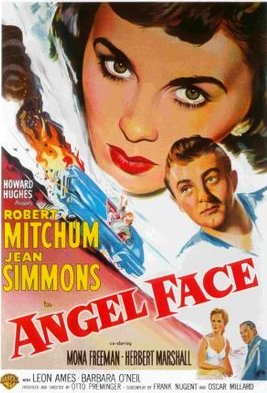
***Out In The Film Noir Night-With Robert Mitchum’s“Angel Face” In Mind


From The Pen Of Frank Jackman

…hey, don’t believe everything you read in the newspapers about that Jeffers suicide/ murder, the one that happened a while back, the one where the wife, the one with the dough, big dough, backed up their Jaguar in the driveway of their country estate at about eighty miles an hour and had them tumble down the hilly embankment and done. They, the newspapers, or their reporters, or somebody got a lot of it all balled up, all balled up big time. I know, I sure in hell know, the real scoop, except the end which they, the newspapers got right. Dead right. See Frank Jeffers had been in my place, my little diner, Sammy’s, located just on the outskirts of Santa Barbara that morning on the day when it happened.

He wanted to see what his old Bakersfield corner boy neighborhood and army buddy, me, Sam James, had to say about his predicament, about whether he should pull up stakes and leave her, leave Diane, leave Diane Tremont Jeffers and the dough and cars, or just go back and face some kind of life with her. I said from what I knew, from what I read, and from being at the trial every day until they were freed, that she was poison, poison worse than his old flame from the neighborhood, Mary, who almost got him killed when some bozo she was fresh flirty interested in decided that he wanted her for his exclusive company and was ready to put Frank six feet under to enforce it. And Mary, well, Mary just laughed that blonde bimbo laugh of hers all thrilled and maybe turned on too that he-men were fighting over her. Naturally Frank being Frank, didn’t want to listen to my advice, as he could never stop chasing some skirt until he tumbled over, sorry Frank, but that was the deal. Let me tell you what he told me and then maybe you can see how he had to go back, go back and face the music.

He had been running, well half- running a garage, Jimmy’s Esso (his partner and a guy he also knew from the service although not a Bakersfield corner boy), just a few miles from Santa Barbra on the other side of town from here, near Route 101, when the call came in that one of the Tremont cars had blown a gasket or something and needed to be either fixed on the spot, or towed to Jimmy’s and worked on. So Frank, since he was the ace mechanic and the tow -truck driver as well (Jimmy, was strictly a gas jockey, but a gas jockey who had the dough and was the brains of the operation), trudged up the hills to the Tremont Estate. A great big place, kind of secluded up a winding road, and like I said up in the hills. He got there, maybe spent an hour fixing this big old Bentley and was ready to leave when she, Diane she, came out of the house and started asking questions about cars, and stuff like that. Then she showed him her Jaguar and asked him if he could check something. Now this was no ordinary Jag, but a specially built job, build just for her. He was hooked, hooked not just on the car but her, something about her manner, her angel face manner, was intriguing , something a little different.

Maybe like with all women it was her scent, that jasmine stuff she wore, and maybe she was kind of young and fresh and naïve, see she was only twenty and that won him over. The car too, for sure. But mainly her, mainly that angel face. So he took the ticket and took the ride. He had had a tough stretch of luck with women since he got back from the service, a bunch of round heels and two, maybe three-timers, especially the last one, a blonde as usual, who took him for a ride, and then blew town with his dough, his car, and some guy named Marty. So maybe it was that Diane was a brunette and he was looking to change his luck. Maybe he should have stuck to blondes, harmless blondes, who just took your dough and at least left you breathing.
This Tremont set-up by the way was all the step-mother’s dough, Dora, not hers, not hers directly. See her own mother had died young, and her father, a novelist, a big time British novelist, David Tremont, you might have read on of his books, Captain Smiley’s Revenge, or something like that, had married into the Moore fortune, stocks and bonds stuff. Diane was close, too close to the father if you know what I mean (she told Frank one night some intimate stuff about her and the father but he thought it was just so much trying to make him jealous or something, kid’s stuff) and hated the step-mother with a passion, a deadly passion as it turned out.

She kept needling Frank endlessly about how bad the step-mother was, and went on and on about it. About some wicked witch of the west idea until Frank started wising up that his sweet Diane, left to her own devices, was not above murdering old Dora. Frank, maybe a fool in love choices was no fool when it came to where he might fit in the set-up and so he decided a twenty- year old brunette was nice but not nice enough to take the big step-off for, that "hang 'em high"gallows waiting for him up at Q, or Folsom or some big step-off place. And so he bowed out, or tried to, but before he could do so Diane carried out her little scheme, her little scheme of fooling around with Dora’s old Bentley steering wheel. What Diane didn’t know, couldn’t have figured on, was that the day Dora was to drive that beast, drive it accelerator pedal to the floor down that fateful embankment that her father would be in the car too.

Diane, Frank did say, was full of remorse after that happened, after the father took the big tumble and she even tried to take the rap alone for the murders. But see Frank, ace auto mechanic Frank, no dough Frank, plenty of dough Diane (left by that step-mother in her will since she didn’t trust old David to not run out and spend it foolishly), was custom-built to fit the frame for doing the deed, or helping. So Diane’s very expensive lawyer built the case to the cops, and later to the jury, that Frank was up to his neck in the thing. And the outward facts seemed to fit. The only way out as you know from the big newspaper splash at the time of those murders was if they got married, married enough, to make the whole set-up just some crime of passion, if anything. Maybe you saw that movie where Lana Turner and John Garfield tie the knot, tie the knot at some high-priced lawyer's request, you know the film I mean, uh, yah, The Postman Always Rings Twice. Diane's lawyer must have seen it too. So yah, they got off, runaway jury got off the big step-off, murder one.

Frank though had had enough; he didn’t want to be looking for angel faces behind his back for the rest of his life. He wanted to get to Mexico, get somewhere far from her. He went back to the Tremont place one night to pack his bags and give his leaving speech. Then she sprang the car, dough, and maybe sponsoring a racing team which he would lead on him (Frank had been a very promising auto racer before we headed to those Pacific islands and atolls to wipe up the Japs). He said then, maybe jasmine scent said too, that he would think it over. That next morning is when he told me the skinny, and you already know my opinion. What you didn’t know, and it never came out, was that Frank bought my argument, or maybe he just added mine to his already made up mind, and was going back to tell Diane nix and he was heading south. According to Johnny, one of the house servants who overheard it all, and who told me the real story later when I went to check out what the hell happened, they had a row over him going. A big row, no holds barred. Then she offered him a ride to the bus station. The rest you do know. RIP Frank, RIP old buddy.

***Labor's Untold Story- Remember The Heroic Homestead Steel Strike of 1892


Click below to link to PBS documentary information about the Homestead Strike of 1892. There are many lessons about the role of the state, whose state it is, how to organize, how not to organize and who to rely on from that class battle that are applicable to day.

http://www.pbs.org/wgbh/amex/carnegie/peopleevents/pande04.html

Every Month Is Labor History Month


This Commentary is part of a series under the following general title: Labor’s Untold Story- Reclaiming Our Labor History In Order To Fight Another Day-And Win!

As a first run through, and in some cases until I can get enough other sources in order to make a decent presentation, I will start with short entries on each topic that I will eventually go into greater detail about. Or, better yet, take my suggested topic and run with it yourself.
***Poet's Corner- Andrew Marvell's Ode To Oliver Cromwell


Here is Andrew Marvell's famous Ode To Oliver Cromwell. Marvell was a friend of, student of and subsequently succeeded John Milton as Secretary of Foreign Tongues under the Cromwellian Protectorate. I will divide this ode up better when I can find a book copy that does so. Markin.

The First Anniversary Of
the Government under O.C.

by Andrew Marvell


Like the vain Curlings of the Watry maze,
Which in smooth streams a sinking Weight does raise;
So Man, declining alwayes, disappears.
In the Weak Circles of increasing Years;
And his short Tumults of themselves Compose,
While flowing Time above his Head does close.
Cromwell alone with greater Vigour runs,
(Sun-like) the Stages of succeeding Suns:
And still the Day which he doth next restore,
Is the just Wonder of the Day before.
Cromwell alone doth with new Lustre spring,
And shines the Jewel of the yearly Ring.

'Tis he the force of scatter'd Time contracts,
And in one Year the Work of Ages acts:
While heavy Monarchs make a wide Return,
Longer, and more Malignant then Saturn:
And though they all Platonique years should raign,
In the same Posture would be found again.
Their earthly Projects under ground they lay,
More slow and brittle then the China clay:
Well may they strive to leave them to their Son,
For one Thing never was by one King don.
Yet some more active for a Frontier Town
Took in by Proxie, beggs a false Renown;
Another triumphs at the publick Cost,
And will have Wonn, if he no more have Lost;
They fight by Others, but in Person wrong,
And only are against their Subjects strong;
Their other Wars seem but a feign'd contest,
This Common Enemy is still opprest;
If Conquerors, on them they turn their might;
If Conquered, on them they wreak their Spight:
They neither build the Temple in their dayes,
Nor Matter for succeeding Founders raise;
Nor Sacred Prophecies consult within,
Much less themselves to perfect them begin,
No other care they bear of things above,
But with Astrologers divine, and Jove,
To know how long their Planet yet Reprives
From the deserved Fate their guilty lives:
Thus (Image-like) and useless time they tell,
And with vain Scepter strike the hourly Bell;
Nor more contribute to the state of Things,
Then wooden Heads unto the Viols strings,

While indefatigable Cromwell hyes,
And cuts his way still nearer to the Skyes,
Learning a Musique in the Region clear,
To tune this lower to that higher Sphere.

So when Amphion did the Lute command,
Which the God gave him, with his gentle hand,
The rougher Stones, unto his Measures hew'd,
Dans'd up in order from the Quarreys rude;
This took a Lower, that an Higher place,
As he the Treble alter'd, or the Base:
No Note he struck, but a new Story lay'd,
And the great Work ascended while he play'd.

The listning Structures he with Wonder ey'd,
And still new Stopps to various Time apply'd:
Now through the Strings a Martial rage he throws,
And joyng streight the Theban Tow'r arose;
Then as he strokes them with a Touch more sweet,
The flocking Marbles in a Palace meet;
But, for he most the graver Notes did try,
Therefore the Temples rear'd their Columns high:
Thus, ere he ceas'd, his sacred Lute creates
Th'harmonious City of the seven Gates.

Such was that wondrous Order and Consent,
When Cromwell tun'd the ruling Instrument;
While tedious Statesmen many years did hack,
Framing a Liberty that still went back;
Whose num'rous Gorge could swallow in an hour
That Island, which the Sea cannot devour:
Then our Amphion issues out and sings,
And once he struck, and twice, the pow'rful Strings.

The Commonwealth then first together came,
And each one enter'd in the willing Frame;
All other Matter yields, and may be rul'd;
But who the Minds of stubborn Men can build?
No Quarry bears a Stone so hardly wrought,
Nor with such labour from its Center brought;
None to be sunk in the Foundation bends,
Each in the House the highest Place contends,
And each the Hand that lays him will direct,
And some fall back upon the Architect;
Yet all compos'd by his attractive Song,
Into the Animated City throng.

The Common-wealth does through their Centers all
Draw the Circumf'rence of the publique Wall;
The crossest Spirits here do take their part,
Fast'ning the Contignation which they thwart;
And they, whose Nature leads them to divide,
Uphold, this one, and that the other Side;
But the most Equal still sustein the Height,
And they as Pillars keep the Work upright;
While the resistance of opposed Minds,
The Fabrick as with Arches stronger binds,
Which on the Basis of a Senate free,
Knit by the Roofs Protecting weight agree.

When for his Foot he thus a place had found,
He hurles e'r since the World about him round,
And in his sev'ral Aspects, like a Star,
Here shines in Peace, and thither shoots a War.
While by his Beams observing Princes steer,
And wisely court the Influence they fear,
O would they rather by his Pattern won.
Kiss the approaching, nor yet angry Son;
And in their numbred Footsteps humbly tread
The path where holy Oracles do lead;
How might they under such a Captain raise
The great Designs kept for the latter Dayes!
But mad with reason, so miscall'd, of State
They know them not, and what they know not, hate
Hence still they sing Hosanna to the Whore,
And her whom they should Massacre adore:
But Indians whom they should convert, subdue;
Nor teach, but traffique with, or burn the Jew.

Unhappy Princes, ignorantly bred,
By Malice some, by Errour more misled;
If gracious Heaven to my Life give length,
Leisure to Times, and to my Weakness Strength,
Then shall I once with graver Accents shake
Your Regal sloth, and your long Slumbers wake:
Like the shrill Huntsman that prevents the East,
Winding his Horn to Kings that chase the Beast.

Till then my Muse shall hollow far behind
Angelique Cromwell who outwings the wind;
And in dark Nights, and in cold Dayes alone
Pursues the Monster thorough every Throne:
Which shrinking to her Roman Den impure,
Gnashes her Goary teeth; nor there secure.

Hence oft I think, if in some happy Hour
High Grace should meet in one with highest Pow'r,
And then a seasonable People still
Should bend to his, as he to Heavens will,
What we might hope, what wonderful Effect
From such a wish'd Conjuncture might reflect.
Sure, the mysterious Work, where none withstand,
Would forthwith finish under such a Hand:
Fore-shortned Time its useless Course would stay,
And soon precipitate the latest Day.
But a thick Cloud about that Morning lyes,
And intercepts the Beams of Mortal eyes,
That 'tis the most which we deteremine can,
If these the Times, then this must be the Man.
And well he therefore does, and well has guest,
Who in his Age has always forward prest:
And knowing not where Heavens choice may light,
Girds yet his Sword, and ready stands to fight;
But Men alas, as if they nothing car'd,
Look on, all unconcern'd, or unprepar'd;
And Stars still fall, and still the Dragons Tail
Swinges the Volumes of its horrid Flail.
For the great Justice that did first suspend
The World by Sin, does by the same extend.
Hence that blest Day still counterpoysed wastes,
The ill delaying, what th'Elected hastes;
Hence landing Nature to new Seas it tost,
And good Designes still with their Authors lost.

And thou, great Cromwell, for whose happy birth
A Mold was chosen out of better Earth;
Whose Saint-like Mother we did lately see
Live out an Age, long as a Pedigree;
That she might seem, could we the Fall dispute,
T'have smelt the Blossome, and not eat the Fruit;
Though none does of more lasting Parents grow,
But never any did them Honor so;
Though thou thine Heart from Evil still unstain'd,
And always hast thy Tongue from fraud refrain'd,
Thou, who so oft through Storms of thundring Lead
Hast born securely thine undaunted Head,
Thy Brest through ponyarding Conspiracies,
Drawn from the Sheath of lying Prophecies;
Thee proof beyond all other Force or Skill,
Our Sins endanger, and shall one day kill.

How near they fail'd, and in thy sudden Fall
At once assay'd to overturn us all.
Our brutish fury strugling to be Free,
Hurry'd thy Horses while they hurry'd thee.
When thou hadst almost quit thy Mortal cares,
And soyl'd in Dust thy Crown of silver Hairs.

Let this one Sorrow interweave among
The other Glories of our yearly Song.
Like skilful Looms which through the costly threed
Of purling Ore, a shining wave do shed:
So shall the Tears we on past Grief employ,
Still as they trickle, glitter in our Joy.
So with more Modesty we may be True,
And speak as of the Dead the Praises due:
While impious Men deceiv'd with pleasure short,
On their own Hopes shall find the Fall retort.

But the poor Beasts wanting their noble Guide,
What could they move? shrunk guiltily aside.
First winged Fear transports them far away,
And leaden Sorrow then their flight did stay.
See how they each his towring Crest abate,
And the green Grass, and their known Mangers hate,
Nor through wide Nostrils snuffe the wanton air,
Nor their round Hoofs, or curled Mane'scompare;
With wandring Eyes, and restless Ears theystood,
And with shrill Neighings ask'd him of the Wood.

Thou Cromwell falling, not a stupid Tree,
Or Rock so savage, but it mourn'd for thee:
And all about was heard a Panique groan,
As if that Natures self were overthrown.
It seem'd the Earth did from the Center tear;
It seem'd the Sun was faln out of the Sphere:
Justice obstructed lay, and Reason fool'd;
Courage disheartned, and Religion cool'd.
A dismal Silence through the Palace went,
And then loud Shreeks the vaulted Marbles rent.
Such as the dying Chorus sings by turns,
And to deaf Seas, and ruthless Tempests mourns,
When now they sink, and now the plundring Streams
Break up each Deck, and rip the Oaken seams.

But thee triumphant hence the firy Carr,
And firy Steeds had born out of the Warr,
From the low World, and thankless Men above,
Unto the Kingdom blest of Peace and Love:
We only mourn'd our selves, in thine Ascent,
Whom thou hadst lest beneath with Mantle rent.

For all delight of Life thou then didst lose,
When to Command, thou didst thy self Depose;
Resigning up thy Privacy so dear,
To turn the headstrong Peoples Charioteer;
For to be Cromwell was a greater thing,
Then ought below, or yet above a King:
Therefore thou rather didst thy Self depress,
Yielding to Rule, because it made thee Less.

For, neither didst thou from the first apply
Thy sober Spirit unto things too High,
But in thine own Fields exercisedst long,
An Healthful Mind within a Body strong;
Till at the Seventh time thou in the Skyes,
As a small Cloud, like a Mans hand didst rise;
Then did thick Mists and Winds the air deform,
And down at last thou pow'rdst the fertile Storm;
Which to the thirsty Land did plenty bring,
But though forewarn'd, o'r-took and wet the King.

What since he did, an higher Force him push'd
Still from behind, and it before him rush'd,
Though undiscern'd among the tumult blind,
Who think those high Decrees by Man design'd.
'Twas Heav'n would not that his Pow'r should cease,
But walk still middle betwixt War and Peace;
Choosing each Stone, and poysing every weight,
Trying the Measures of the Bredth and Height;
Here pulling down, and there erecting New,
Founding a firm State by Proportions true.

When Gideon so did from the War retreat,
Yet by Conquest of two Kings grown great,
He on the Peace extends a Warlike power,
And Is'rel silent saw him rase the Tow'r;
And how he Succoths Elders durst suppress,
With Thorns and Briars of the Wilderness.
No King might ever such a Force have done;
Yet would not he be Lord, nor yet his Son.

Thou with the same strength, and an Heart as plain,
Didst (like thine Olive) still refuse to Reign;
Though why should others all thy Labor spoil,
And Brambles be anointed with thine Oyl,
Whose climbing Flame, without a timely stop,
Had quickly Levell'd every Cedar's top.
Therefore first growing to thy self a Law,
Th'ambitious Shrubs thou in just time didst aw.

So have I seen at Sea, when whirling Winds,
Hurry the Bark, but more the Seamens minds,
Who with mistaken Course salute the Sand,
And threat'ning Rocks misapprehend for Land;
While balefull Tritons to the shipwrack guide,
And Corposants along the Tacklings slide.
The Passengers all wearyed out before,
Giddy, and wishing for the fatall Shore;
Some lusty Mate, who with more carefull Ey
Counted the Hours, and ev'ry Star did spy,
The Helm does from the artless Steersman strain,
And doubles back unto the safer Main.
What though a while they grumble discontent,
Saving himself he does their loss prevent.


'Tis not a Freedome, that where All command;
Nor Tyranniey, where One does them withstand:
But who of both the Bounders knows to lay
Him as their Father must the State obey.

Thou, and thine House, like Noahs Eight did rest,
Left by the Warrs Flood on the Mountains crest:
And the large Vale lay subject to thy Will,
Which thou but as an Husbandman wouldst Till:
And only didst for others plant the Vine
Of Liberty, not drunken with its Wine.

That sober Liberty which men may have,
That they enjoy, but more they vainly crave:
And such as to their Parents Tents do press,
May shew their own, not see his Nakedness.

Yet such a Chammish issue still does rage,
The Shame and Plague both of the Land and Age,
Who watch'd thy halting, and thy Fall deride,
Rejoycing when thy Foot had slipt aside;
That their new King might the fifth Scepter shake,
And make the World, by his Example, Quake:
Whose frantique Army should they want for Men
Might muster Heresies, so one were ten.
What thy Misfortune, they the Spirit call,
And their Religion only is to Fall.
Oh Mahomet! now couldst thou rise again,
Thy Falling sicknes should have made thee Reign,
While Feake and Simpson would in many a Tome,
Have writ the Comments of thy sacred Foame:
For soon thou mightst have past among their Rant
Wer't but for thine unmoved Tulipant;
As thou must needs have own'd them of thy band
For Prophecies fit to be Alcorand.

Accursed Locusts, whom your King does spit
Out of the Center of th' unbottom'd Pit;
Wand'rers, Adult'rers, Lyers, Munser's rest,
Sorcerers, Atheists, Jesuites, Possest;
You who the Scriptures and the Laws deface
With the same liberty as Points and Lace;
Oh Race most hypocritically strict!
Bent to reduce us to the ancient Pict;
Well may you act the Adam and the Eve;
Ay, and the Serpent too that did deceive.

But the great Captain, now the danger's ore,
Makes you for his sake Tremble one fit more;
And, to your spight, returning yet alive
Does with himself all that is good revive.

So when first Man did through the Morning new
See the bright Sun his shining Race pursue,
All day he follow'd with unwearied sight,
Pleas'd with that other World of moving Light;
But thought him when he miss'd his setting beams,
Sunk in the Hills, or plung'd below the Streams.
While dismal blacks hung round the Universe,
And Stars (like Tapers) burn'd upon his Herse:
And Owls and Ravens with their screeching noyse
Did make the Fun'rals sadder by their Joyes.
His weeping Eys the dolefull Vigils keep,
Not knowing yet the Night was made for sleep:
Still to the West, where he him lost, he turn'd,
And with such accents, as Despairing, mourn'd:
Why did mine Eyes once see so bright a Ray;
Or why Day last no longer than a Day?
When streight the Sun behind him he descry'd,
Smiling serenely from the further side.

So while our Star that gives us Light and Heat,
Seem'd now a long and gloomy Night to threat,
Up from the other World his Flame he darts,
And Princes, shining through their windows, starts;
Who their suspected Counsellors refuse,
And credulous Ambassadors accuse.

“Is this,” saith one, “the Nation that we read
Spent with both Wars, under a Captain dead?
Yet rig a Navy while we dress us late;
And ere we Dine, rase and rebuild our State.
What Oaken Forrests, and what golden Mines!
What Mints of Men, what Union of Designes!
Unless their Ships, do, as their Fowle proceed
Of shedding Leaves, that with their Ocean breed.
Theirs are not Ships, but rather Arks of War,
And beaked Promontories sail'd from farr;
Of floting Islands a new Hatched Nest;
A Fleet of Worlds, of other Worlds in quest;
An hideous shole of wood-Leviathans,
Arm'd with three Tire of brazen Hurricans;
That through the Center shoot their thundring side
And sink the Earth that does at Anchor ride.
What refuge to escape them can be found,
Whose watry Leaguers all the world surround?
Needs must we all their Tributaries be,
Whose Navies hold the Sluces of the Sea.
The Ocean is the Fountain of Command,
But that once took, we Captives are on Land:
And those that have the Waters for their share,
Can quickly leave us neither Earth nor Air.
Yet if through these our Fears could find a pass;
Through double Oak, & lin'd with treble Brass;
That one Man still, although but nam'd, alarms
More then all Men, all Navies, and all Arms.
Him, all the Day, Him, in late Nights I dread,
And still his Sword seems hanging o're my head.
The Nation had been ours, but his one Soul
Moves the great Bulk, and animates the whole.
He Secrecy with Number hath inchas'd,
Courage with Age, Maturity with Hast:
The Valiants Terror, Riddle of the Wise;
And still his Fauchion all our Knots unties.
Where did he learn those Arts that cost us dear?
Where below Earth, or where above the Sphere?
He seems a King by long Succession born,
And yet the same to be a King does scorn.
Abroad a King he seems, and something more,
At Home a Subject on the equal Floor.
O could I once him with our Title see,
So should I hope yet he might Dye as wee.
But let them write his Praise that love him best,
It grieves me sore to have thus much confest.”

Pardon, great Prince, if thus their Fear or Spight
More then our Love and Duty do thee Right.
I yield, nor further will the Prize contend;
So that we both alike may miss our End:
While thou thy venerable Head dost raise
As far above their Malice as my Praise.
And as the Angel of our Commonweal,
Troubling the Waters, yearly mak'st them Heal.


--------------------------------------------------------------------------------
Source:
Marvell, Andrew. The Complete Poems.
George deF. Lord, Ed.
London: J. M. Dent & Sons, Ltd., 1984. 93-104.

--------------------------------------------------------------------------------


to Andrew Marvell

Site copyright ©1996-2007 Anniina Jokinen. All Rights Reserved.
Created by Anniina Jokinen on July 25, 2000. Last updated on September 10, 2006.